


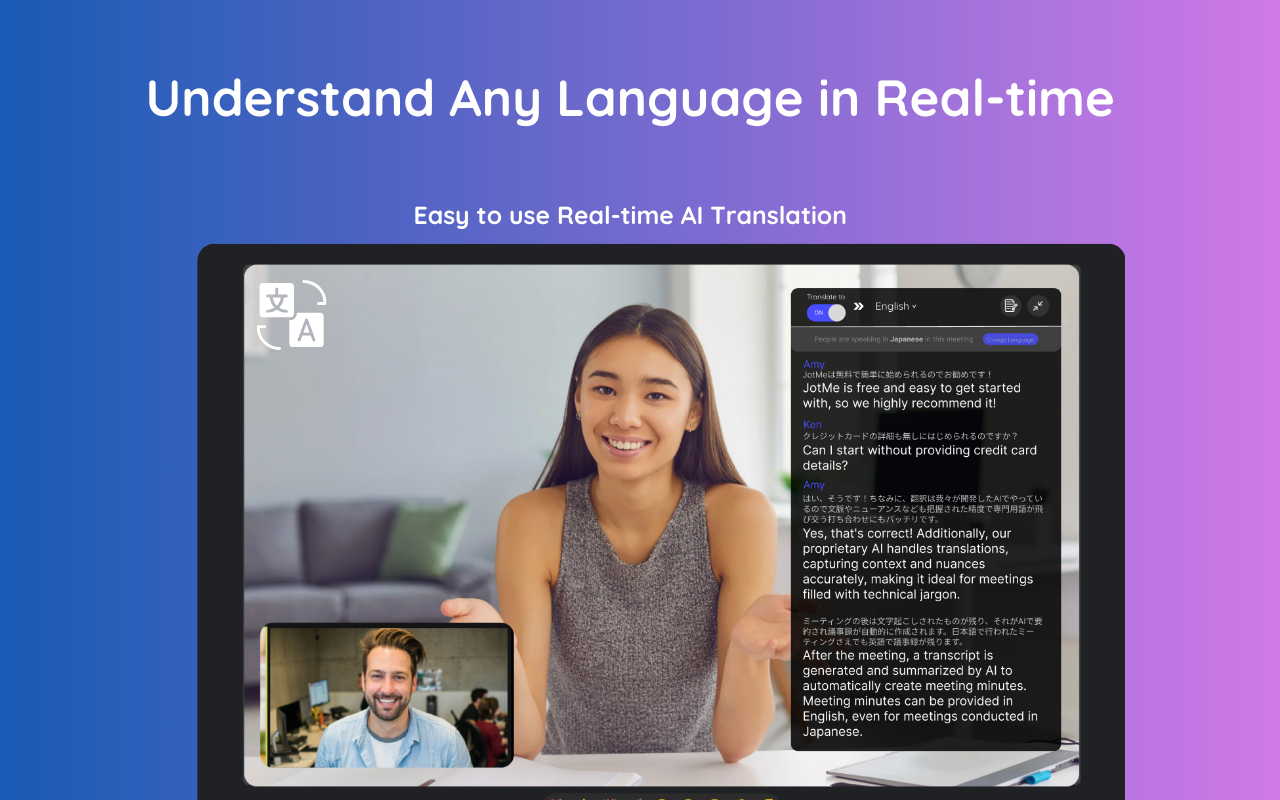
Google has unveiled one of its most ambitious communication technologies yet—a real-time AI meeting translator capable of handling more than seventy languages instantly. This new tool aims to break down global language barriers, making virtual and in-person meetings more inclusive, productive and seamless for users around the world. As companies expand across borders and remote work becomes the norm, this innovation arrives at exactly the right time.
The real-time translator is powered by Google’s latest generative AI models, specially trained to understand tone, accents and complex speech patterns. Unlike older translation tools that produce delayed or inaccurate results, this new system translates conversations as they happen. Participants speaking different languages can join the same meeting, talk naturally and receive instant translations in their chosen language without missing key details. Google has emphasized that the tool is optimized not just for accuracy but also for conversational flow.
One of the biggest advantages of this technology is its adaptability across platforms. The translator is integrated into Google Meet and is also available through compatible enterprise tools. Users can enable it with a single toggle, letting everyone choose how they want the translation displayed—text on screen, audio playback or a combination of both. This flexibility ensures that the experience remains smooth whether someone prefers reading subtitles or listening to a translated voice.
The feature also introduces significant benefits for international businesses. Teams across different countries can collaborate more effectively without needing a dedicated interpreter. Global companies can host training sessions, presentations and negotiations with reduced friction, saving both time and costs. Small businesses and freelancers, who often struggle with language limitations, also gain equal access to global opportunities with this new tool.
Google’s AI translator also brings value to education. International students can now attend virtual classes hosted in foreign languages without feeling left behind. Teachers can communicate with diverse classrooms more freely, and institutions can reach global audiences more easily. For researchers and academic professionals, the tool provides clearer communication during conferences, joint projects and expert discussions.
To maintain accuracy, Google has implemented machine learning systems that adapt to a speaker’s pace and speech style. The tool continuously learns from context during a meeting, improving translations as the conversation progresses. This reduces misunderstandings and ensures that professional terminology, cultural expressions and industry-specific terms are interpreted correctly. Google has also assured users that privacy remains a priority, with translations processed securely within protected environments.
The launch of the real-time translator reflects a broader trend in the tech world—AI-powered communication tools are rapidly evolving to create more connected global experiences. With travel restrictions easing and hybrid workplaces becoming the global standard, the need for universal translation has never been higher. Google’s solution addresses this demand with the speed and sophistication required for modern communication.
However, the tool does face certain challenges. Real-time translation depends heavily on clear audio, stable network connections and accurate voice recognition. While Google’s AI performs exceptionally well in controlled environments, noisy backgrounds or overlapping conversations may still affect performance. Despite these limitations, early users have reported strong accuracy rates and significant improvements over older translation systems.
With support for over seventy languages and more updates expected in the coming months, Google’s AI meeting translator sets a new standard for multilingual communication. It hints at a future where language differences no longer act as barriers but become bridges for smoother collaboration. As global interactions continue to expand, tools like this will play a crucial role in shaping how people connect and work together across borders.
Google’s innovation marks another major step toward a world where communication is universal, effortless and accessible to everyone—no matter what language they speak.


