


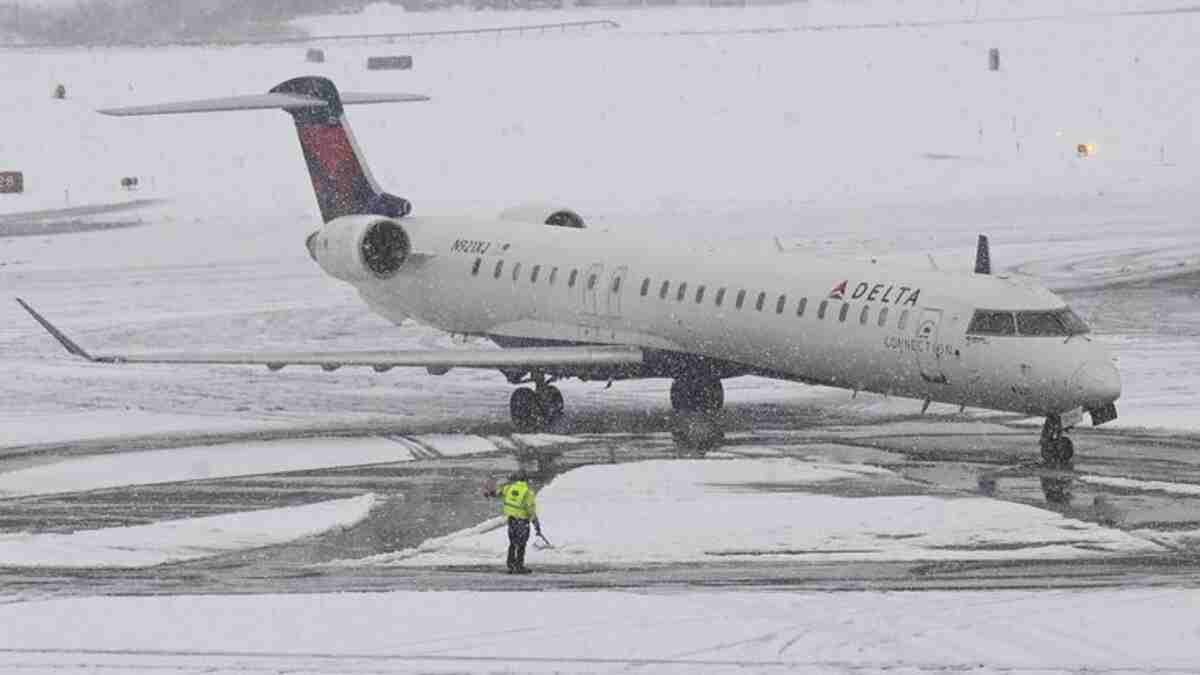
As a powerful Winter Storm Fern sweeps across the United States this weekend, airlines are grappling with widespread flight disruptions that are impacting travel from the South to the Northeast. Delta Air Lines has canceled dozens of flights at key hubs — including Atlanta, Boston, and New York — as hazardous ice, snow, and strong winds begin to batter major cities and transport corridors.
The storm’s effects extend well beyond Delta, with hundreds of cancellations and delays already reported by multiple carriers as forecasters warn of severe weather that could persist through Sunday and into early next week.
Major Airlines Scramble as Storm Intensifies
Delta has announced additional flight cancellations across its network, particularly at its busiest East Coast hubs including Atlanta, Boston Logan International Airport, and New York area airports, as Winter Storm Fern moves into the region. The airline is urging travelers with weekend itineraries to adjust their travel plans due to expected disruptions from ice in the Southeast and significant snow in the Northeast.
This comes on top of pre-emptive cancellations at airports in Texas, Oklahoma, Arkansas, Louisiana, and Tennessee, where anticipated ice and snow already forced Delta to realign schedules and issue travel waivers for affected passengers.
Other major carriers — including American, United, Southwest, and JetBlue — have also reported widespread schedule instability with thousands of cancellations and delays expected as the storm pushes up the Eastern Seaboard.
Surge in Cancellations Across the Country
According to flight-tracking services and airline updates, a staggering number of flights — well over 4,000 — have already been canceled nationwide, with many more expected as the storm intensifies.
Travel tracking platforms indicate the total number of canceled flights could climb into the 6,000 to 9,000 range by Sunday as snow, sleet, and ice continue to disrupt aircraft operations at major airports.
The impact is not restricted to the East Coast; severe winter weather conditions stretching from Texas and the Midwest to New England are forcing airlines to reevaluate entire travel schedules and expand flexibility options for passengers.
How Airlines Are Responding
In response to intense disruptions, many airlines are offering travel waivers, allowing passengers to rebook flights without change fees and providing refunds for canceled itineraries. Delta is among those offering waivers for travel through affected areas, encouraging customers to adjust plans through airline apps or customer service.
Despite these efforts, passengers are still facing long waits at airports and overwhelmed rebooking systems, illustrating the scale of the storm’s impact on U.S. air travel.
Broader Transportation Impacts
Travel experts warn that air travel is only part of the disruption. The massive winter storm is expected to bring dangerous road conditions, power outages, and travel restrictions from Texas to the Northeast, prompting authorities to issue travel advisories and emergency declarations in multiple states.
Train service disruptions have also been reported, with major rail lines scaling back or canceling routes in anticipation of heavy snow and extreme conditions as the storm moves eastward.
What Travelers Should Know
If you are planning travel in the coming days, experts recommend checking the status of your flight multiple times before departure, ideally via the airline’s official app or website, where the latest updates and rebooking options are often posted first.
Passengers whose flights are canceled are generally entitled to automatic refunds, even on non-refundable tickets, but compensation for meals or hotel stays is not guaranteed for weather-related disruptions.
Looking Ahead
Winter Storm Fern is shaping up to be one of the most disruptive weather events of the 2026 season, with its expansive path threatening travel and daily routines across millions of miles of the United States. As snowfall and ice continue to spread, both airlines and travelers are bracing for significant delays and operational challenges — underscoring the increasingly unpredictable nature of winter weather and its effect on modern transportation systems.


