


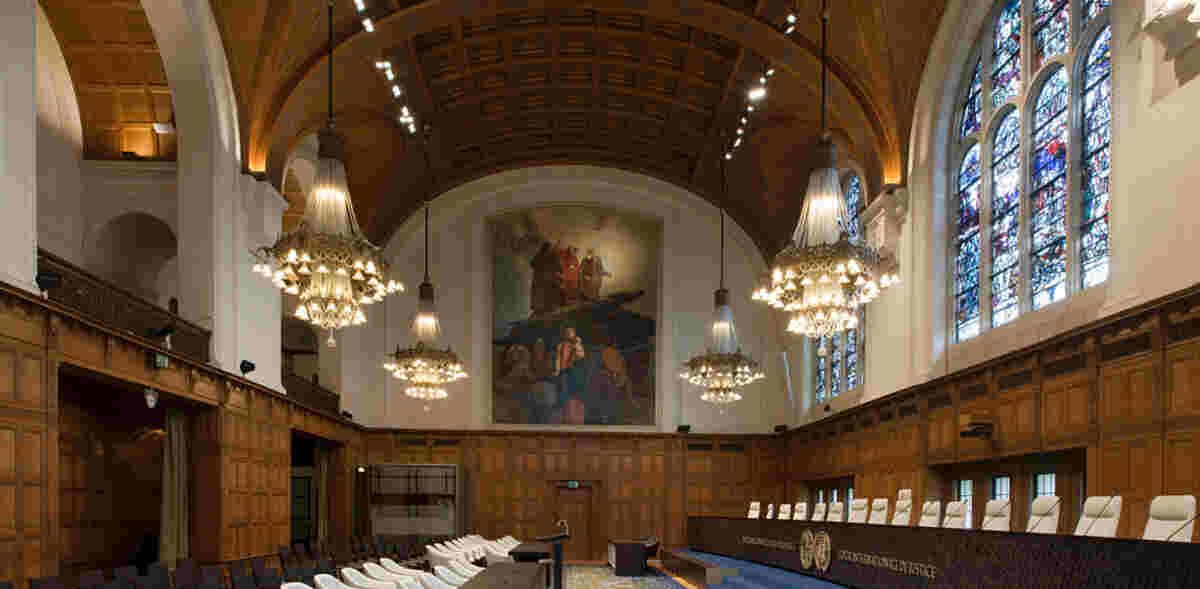
International courts are playing an increasingly important role in resolving disputes between nations, and recent rulings from global tribunals are shaping international law in ways that reach far beyond the countries directly involved. Decisions by bodies such as the International Court of Justice and other international tribunals often have cross-border consequences, influencing diplomacy, trade, security policies, and humanitarian responses around the world.
One of the most significant examples came when the International Court of Justice ruled on a long-standing territorial dispute between Equatorial Guinea and Gabon over several islands in the Gulf of Guinea. The court concluded that Equatorial Guinea held legal sovereignty over the disputed islands based on a colonial-era treaty signed in 1900. Gabon’s competing claim, which relied on a later agreement from 1974, was deemed insufficient because the court determined it did not have the legal force of a binding treaty. The ruling effectively required Gabon to withdraw military personnel from the islands and end a decades-long occupation.
Although the case focused on a small group of islands, the decision carried wider implications for international law. The court emphasized stricter standards for documentary evidence and treaty validity, reinforcing the principle that historical agreements can still determine modern sovereignty claims. Legal experts say this precedent could influence future territorial disputes, particularly those involving colonial boundaries or resource-rich maritime zones.
International tribunals are also addressing humanitarian and human-rights issues that extend across borders. In another major case, the International Court of Justice ordered Israel to allow humanitarian aid into Gaza and stated that restrictions on aid violated international obligations under humanitarian law. The court argued that the occupying power must allow relief supplies and cannot restrict access in a way that risks starvation or humanitarian catastrophe. The ruling has triggered diplomatic pressure from multiple countries and raised the possibility of broader international enforcement actions.
At the same time, new cases being heard at international courts could further reshape global legal standards. Hearings have recently opened in a landmark case accusing Myanmar of genocide against the Rohingya minority. The case was brought by Gambia under the United Nations Genocide Convention and represents one of the most significant attempts to hold a state accountable for mass human-rights violations through international legal institutions. Legal observers say the outcome could establish stronger precedents for prosecuting crimes against humanity at the international level.
International courts are also increasingly used to address political disputes between countries. Lithuania, for instance, has brought a case against Belarus before the International Court of Justice, accusing it of facilitating the smuggling of migrants into the European Union as part of a broader geopolitical conflict. Lithuania is seeking compensation and legal accountability for the alleged violations of international law. The case demonstrates how migration issues and border tensions are now being fought not only through diplomacy but also through international litigation.
Beyond individual cases, the growing influence of international courts reflects a broader shift in global governance. As trade, migration, and environmental issues become more interconnected, disputes increasingly involve multiple countries and international treaties. Courts and arbitration bodies are therefore becoming key platforms for resolving conflicts that traditional diplomacy cannot easily settle.
Legal scholars note that while international court decisions are legally binding in many situations, their enforcement often depends on political cooperation between states. Nevertheless, these rulings carry significant diplomatic weight and can influence negotiations, sanctions, and international policy decisions.
With more nations turning to international tribunals to settle disputes, the global legal system is entering a period of rapid evolution. Each ruling not only resolves a specific conflict but also contributes to the development of international law. As new cases emerge involving territorial boundaries, climate responsibility, and human rights, international courts are likely to remain at the center of some of the world’s most important geopolitical decisions.


